Access to Integrated Employment
Moving Forward after COVID-19: Implications for Ongoing Use of Remote and Virtual Supports in Promoting and Supporting Integrated Employment
This brief describes the findings from a survey developed and implemented by the Association of Persons Supporting Employment (APSE) on how employment and day service providers used remote and virtual supports. Findings from the survey and a set of considerations to improve employment services, policies, and practices based on lessons learned are offered.
The Basics of Social Security Disability Benefits
This factsheet is a basic overview of Supplementary Security Income (SSI) and
Social Security Disability Insurance (SSDI) benefits.
Ohio’s Technology First Policy: Enabling Swift Delivery of Remote Supports During the Covid-19 Pandemic
Ohio’s Technology First policy ensured that people eligible for services through Department of Developmental Disabilities had increased opportunities to live, work, and thrive in their homes and communities during the Covid-19 pandemic through state-of-the-art planning, innovative technology and supports.
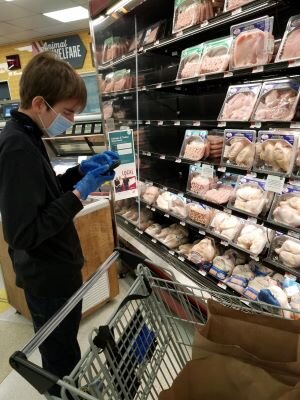 Nikolas is 22 years old and works for Amazon at Whole Foods in Providence, Rhode Island as a personal shopper. In this job, he uses an Amazon phone that receives the customers’ orders and payments. Nikolas fulfills the customers’ requests, bags the items and labels the bags in preparation for delivery. He began working in this position before COVID-19 hit, finding the job after participating in a one-year school-to-work program called
  Christina is an energetic young woman who works at Bothwell Hospital in Sedalia, Missouri as a part-time dietary aide. She enjoys her job and earns well above minimum wage. During the COVID-19 pandemic, Christina’s work conditions and responsibilities changed. As a result, the nature of her supports also shifted from having an on-site job coach to remote supports via iPhone. With the support of her provider, the Center for Human Services (CHS), Christina was able to alter her position and supports and maintain employment.
The Numbers and the Stories Behind Them: Higher Performing State Employment Systems
This document contains the slides from a presentation given at the APSE national conference in 2019. It presents statistics that illustrate the characteristics of relatively higher-performing state systems with regard to employment and community engagement outcomes for individuals with IDD. Click here to view the presentation slides.
State Employment First Policies #3: Investing in Training and Technical Assistance to Build Capacity in Integrated Employment
This brief is the third in a series focusing on Employment First implementation as it relates to one of the seven elements within the High-Performing States in Integrated Employment model. As states undergo implementation of their policies, it is important to understand how state agencies have built employment knowledge and capacity. Download here.
State Employment First Policies #2: Engaging Stakeholders in Development and Implementation
This brief is the second in a series focusing on Employment First implementation as it relates to one of the seven elements within the High-Performing States in Integrated Employment model. It looks at the interagency collaboration and partnership element in depth. Interagency partnership and collaboration includes interagency agreements and relationships, provider collaboration, and outreach to stakeholders to ensure that integrated employment is a shared goal.
 Izzy is 23 years old and lives with her family in Tampa, Florida. She loves swimming, working out, and baking. An internship at an assisted-living facility and related classes at the University of South Florida's Learning Academy helped her succeed later at her first paid job.